







Shubman Gill Sets His Sights on the 2027 ODI World Cup: India’s Long-Term Vision for Cricket Dominance
International cricket is entering a new era, and India’s leadership is already preparing for the next major milestone. Under the captaincy of Shubman Gill, the Indian cricket team has identified the 2027 ICC ODI World Cup as the ultimate long-term objective. The vision goes beyond simply competing for the trophy — it is about building a consistent, dominant team capable of sustaining excellence across formats.
We examine how Gill’s leadership philosophy, India’s squad development strategy, and the broader roadmap of Indian cricket are shaping the team’s journey toward the 2027 ODI World Cup.
The Rise of Shubman Gill as India’s Captain
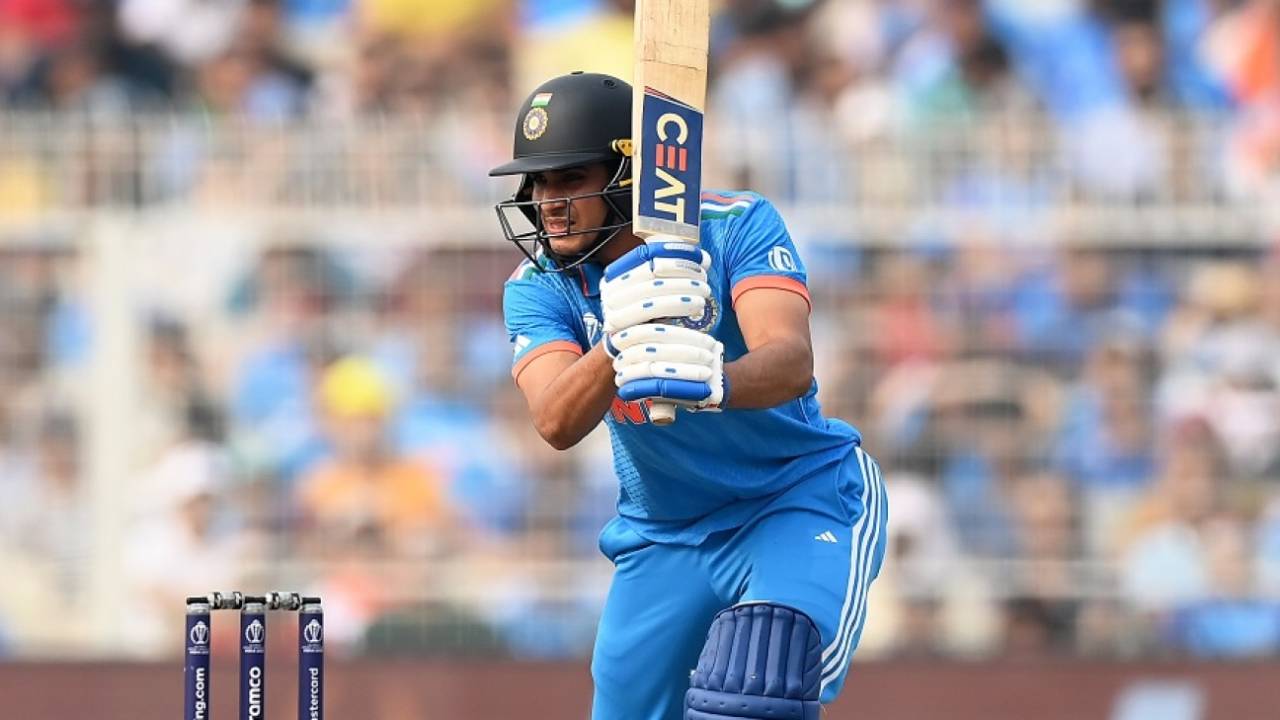
Shubman Gill’s elevation to captaincy reflects a generational shift in Indian cricket. Known for his calm temperament, tactical awareness, and exceptional batting technique, Gill represents the next phase of leadership after an era dominated by experienced stalwarts.
His approach combines aggression with calculated decision-making, making him one of the most promising young captains in world cricket.
Key Leadership Qualities
- Strategic Thinking – Gill emphasizes data-driven decisions and modern match strategies.
- Composure Under Pressure – His calm presence stabilizes the team during high-pressure situations.
- Long-Term Planning – Rather than focusing on short-term victories, Gill prioritizes sustainable success.
- Player Development – Young talents are being nurtured to ensure continuity in the squad.
Under his captaincy, India is adopting a structured roadmap toward the 2027 ODI World Cup.
Why the 2027 ODI World Cup Is the Ultimate Goal
The 2027 ICC Cricket World Cup, scheduled to be hosted jointly by South Africa, Zimbabwe, and Namibia, presents a significant opportunity for India to establish itself as the dominant ODI force of the decade.
Gill has emphasized that preparing early allows the team to develop a balanced squad capable of adapting to diverse playing conditions.
Strategic Importance of the 2027 Tournament
- Generational Transition – The team will be led primarily by players in their peak years.
- Fresh Tactical Approach – Modern analytics and advanced training systems will shape preparation.
- Global Competitiveness – Emerging teams are becoming stronger, requiring India to evolve strategically.
- Adaptation to Conditions – African pitches demand unique batting and bowling strategies.
India’s focus on the 2027 tournament ensures that every series played in the coming years contributes to building a championship-ready squad.
Building India’s Future ODI Core
To achieve success in 2027, India is focusing on developing a balanced squad across batting, bowling, and fielding departments.
Emerging Batting Leaders
India’s batting unit is being structured around dynamic and technically sound players capable of handling diverse conditions.
Key attributes being prioritized include:
- Ability to accelerate the scoring rate in the middle overs
- Consistency in overseas conditions
- Adaptability across formats
Gill himself remains central to this plan, anchoring the top order while guiding younger batters.
Strengthening the Bowling Attack
India’s ODI success historically depends on a potent bowling attack capable of taking wickets throughout the innings.
Key priorities include:
- Developing high-pace fast bowlers suited for bounce-friendly pitches in Africa
- Expanding spin options to control middle overs
- Improving death-over execution
A balanced bowling unit ensures India can defend totals and control matches under pressure.
Fielding as a Competitive Advantage
Modern ODI cricket demands exceptional fielding standards. India’s management is prioritizing:
- Athletic fielders capable of saving crucial runs
- Quick reflexes in the inner circle
- High-impact boundary riders
Fielding improvements could provide the marginal advantage necessary to win tight knockout matches.
India’s Roadmap Toward the 2027 ODI World Cup
India’s preparation strategy involves a phased approach designed to gradually refine the squad and tactics.
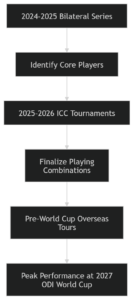
This systematic preparation ensures that every stage contributes to building a cohesive and confident team.
Tactical Evolution in India’s ODI Strategy
Modern ODI cricket has evolved dramatically, and India is adapting accordingly.
Batting Strategy
- Aggressive powerplay scoring
- Flexible batting order
- Increased strike rotation
Bowling Strategy
- Early wicket breakthroughs
- Middle-overs control through spin
- Specialized death-over bowlers
Data and Analytics
Advanced analytics are becoming central to team strategy, allowing players to study opponents’ weaknesses and adjust tactics effectively.
Leadership Philosophy: Gill’s Vision for Indian Cricket
Shubman Gill’s leadership philosophy revolves around clarity, consistency, and confidence.
His key principles include:
- Building a fearless team culture
- Encouraging innovation and experimentation
- Developing young talent alongside experienced players
This philosophy ensures that India remains competitive not only in 2027 but throughout the coming decade.
Challenges India Must Overcome
Despite its immense talent pool, India faces several challenges on the road to the World Cup.
Major Obstacles
- Adapting to African Conditions
The pitches in South Africa and neighboring countries often favor pace and bounce. - Managing Player Workload
Balancing multiple formats while maintaining peak fitness is crucial. - Competition from Emerging Teams
Nations such as England, Australia, and New Zealand continue to evolve tactically. - Handling Knockout Pressure
Winning crucial knockout matches remains essential to lifting the trophy.
Addressing these challenges early will significantly improve India’s chances of success.
The Impact of Young Talent on India’s Future
India’s domestic system continues to produce a steady pipeline of world-class players. The integration of young talent ensures:
- Squad depth
- Tactical flexibility
- Long-term sustainability
The upcoming generation is expected to complement Gill’s leadership and strengthen India’s campaign for the 2027 ODI World Cup.
A New Era for Indian Cricket
The focus on the 2027 ODI World Cup reflects a carefully designed long-term vision rather than a short-term ambition. With Shubman Gill at the helm, India is building a squad that combines youth, experience, innovation, and resilience.
If the current roadmap continues successfully, the Indian team could enter the tournament not just as contenders but as one of the most formidable teams in world cricket.
The journey toward 2027 has already begun — and under Gill’s leadership, Indian cricket is preparing for its next defining chapter.