






Sarfaraz Khan’s Test Comeback Dreams Hit Major Roadblock: Duleep Trophy Injury Compounds Mohammed Shami’s Recovery Woes
Critical Injury Setback Derails Sarfaraz Khan’s International Aspirations
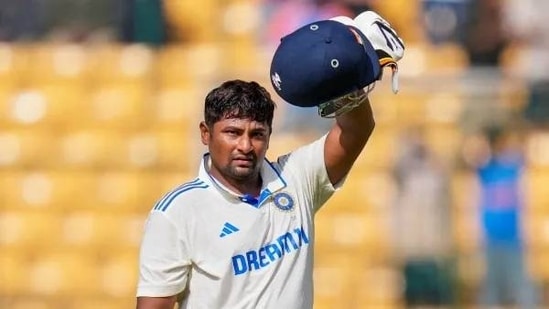
Sarfaraz Khan’s Test Comeback Dreams Hit Major Roadblock: We report that Sarfaraz Khan’s carefully orchestrated return to India’s Test setup has encountered a devastating blow following his withdrawal from the Duleep Trophy semifinal due to a significant quadriceps injury. The 27-year-old batter has been ruled out for three weeks due to a quadriceps injury, forcing him to miss the crucial semifinal clash between West Zone and Central Zone on September 4 at the BCCI’s Centre of Excellence in Bengaluru.
The timing of this injury represents a catastrophic disruption to Khan’s meticulously planned comeback strategy. Having demonstrated exceptional form with consecutive centuries for Mumbai in the Buchi Babu Tournament, the prolific middle-order batsman was positioned to make a compelling case for selection in India’s Test squad against the West Indies. This setback arrives at the most inopportune moment, with national selectors closely monitoring performances in the premier domestic tournament.
Mohammed Shami’s Prolonged Fitness Battle Continues
Parallel to Khan’s misfortune, we observe that Mohammed Shami’s own recovery journey remains fraught with complications. The veteran fast bowler has struggled with fitness ever since injuring his ankle during the 2023 ODI World Cup, undergoing surgery after playing through pain during India’s run to the final, subsequently missing all of India’s fixtures in 2024 due to injury, recovery from surgery, and knee issues.
Recent developments indicate that Shami’s rehabilitation process faces ongoing challenges. The selectors have acknowledged that while they’ve been attempting to get him fit for upcoming series, he’s experienced a setback over the past week. This prolonged absence has created significant concerns within the Indian cricket establishment regarding the pace attack’s depth and reliability.
Duleep Trophy’s Critical Role in National Selection
We emphasize that the Duleep Trophy has evolved into cricket’s most crucial audition platform for aspiring and returning international players. The tournament serves as a critical audition for many names, particularly with high-profile international series against West Indies and South Africa approaching. The competition’s heightened importance stems from its direct correlation with national team selection decisions.
For players like Khan and Shami, the tournament represented their final opportunity to demonstrate match fitness and competitive readiness. The absence of both players from this crucial showcase significantly diminishes their prospects for immediate international recalls, creating ripple effects throughout India’s strategic planning for upcoming series.
Impact on India’s Test Squad Composition
We analyze how these concurrent setbacks fundamentally alter the national team’s selection dynamics. Khan’s injury removes one of the most compelling candidates for middle-order reinforcement, particularly given his outstanding first-class record and recent domestic performances. His absence forces selectors to reconsider alternative options for the crucial number five and six positions.
Simultaneously, Shami’s continued unavailability perpetuates the bowling unit’s uncertainty. The experienced pacer’s absence leaves a significant void in India’s pace attack, compelling the team management to persist with alternative combinations that lack his proven international pedigree and match-winning capabilities.
Selection Committee’s Challenging Decisions
We recognize that the selection committee faces unprecedented challenges in finalizing squads without two potentially key contributors. The absence of Khan and Shami from competitive action creates information gaps that complicate evidence-based selection decisions. Selectors must now rely on training performances, fitness assessments, and historical data rather than current competitive displays.
The situation exemplifies the delicate balance between managing player workloads and maintaining competitive readiness. Both players’ circumstances highlight the ongoing struggle to optimize athlete preparation while ensuring adequate match practice and fitness maintenance.
Alternative Candidates and Strategic Adjustments
We observe that these developments create opportunities for other players to stake their claims. The vacuum left by Khan’s absence opens pathways for emerging middle-order batsmen to demonstrate their capabilities in high-pressure situations. Similarly, Shami’s continued unavailability allows younger pace bowlers to gain valuable experience and establish themselves in the national setup.
The strategic implications extend beyond individual replacements. Team management must recalibrate tactical approaches, considering different skill sets and experience levels of alternative selections. These adjustments require comprehensive planning to maintain competitive standards while integrating new personnel.
Medical and Rehabilitation Considerations
We acknowledge that modern cricket’s physical demands necessitate increasingly sophisticated medical management. Both Khan’s acute injury and Shami’s prolonged rehabilitation highlight the sport’s evolving injury prevention and management protocols. The medical staff’s conservative approach reflects lessons learned from previous instances where premature returns resulted in extended layoffs.
The emphasis on comprehensive recovery processes, while frustrating for players and fans, represents cricket’s growing understanding of long-term athlete welfare. These decisions prioritize sustainable careers over short-term availability, acknowledging the complex relationship between immediate competitive needs and player longevity.
Future Implications and Recovery Timelines
We project that both players face critical junctures in their international careers. Khan’s three-week recovery timeline, if adhered to strictly, could align with future selection opportunities, provided his return to competitive action demonstrates full fitness and form recovery. His age and proven domestic record suggest multiple future chances for international selection.
Shami’s situation presents more complex variables, given his advanced career stage and the cumulative nature of his injuries. The veteran’s return requires not only physical rehabilitation but also competitive readiness through sustained domestic performances. His international future depends significantly on demonstrating consistent fitness over extended periods.
Long-term Career Trajectories and Adaptation
We understand that both players must navigate significant adaptation periods following their respective setbacks. Khan’s injury, while acute, represents a temporary obstacle in an otherwise ascending career trajectory. His exceptional domestic statistics and recent form suggest resilience and the ability to return stronger from this setback.
Shami’s journey requires more nuanced evaluation, considering the accumulated impact of his injuries on his bowling action, stamina, and overall effectiveness. The veteran’s return strategy must balance competitive aspirations with realistic assessment of his physical limitations and remaining career span.
Conclusion: Resilience and Opportunity in Cricket’s Unpredictable Landscape
We conclude that while these setbacks represent significant disappointments for both players and Indian cricket, they also demonstrate the sport’s unpredictable nature and the importance of squad depth. Khan and Shami’s situations underscore the critical balance between ambition and physical reality in professional cricket.
The coming months will reveal whether these challenges become career-defining obstacles or temporary setbacks in otherwise successful international careers. Cricket’s history abundantly demonstrates that great players often emerge stronger from such adversities, using setbacks as motivation for remarkable comebacks.