







R Ashwin Warns of a “Disease” in Indian Cricket: The Rise of Toxic Fan Armies and Its Impact on the Game
Introduction: A Growing Concern in Indian Cricket
R Ashwin Slams Toxic Fan Armies in Indian Cricket: Indian cricket has long been celebrated for its passion, unity, and unmatched fan following. However, recent remarks by Ravichandran Ashwin have sparked a crucial debate about an emerging issue—the rise of toxic “fan armies” and their influence on the sport.
We examine this issue in depth, analyzing how fan-driven narratives are shaping player perception, team dynamics, and the overall ecosystem of Indian cricket.
What Did R Ashwin Say About Fan Armies?
Ashwin described the current fan culture as a “disease” spreading within Indian cricket, emphasizing how blind loyalty toward individual players is undermining the spirit of the game.
He highlighted that:
- Fans are increasingly divided into player-centric factions
- Social media amplifies biased narratives and trolling
- Constructive criticism is often replaced by aggressive defense or attacks
His concern reflects a deeper systemic issue where cricket is no longer just about the team—it is increasingly about individual brand wars.
Understanding the “Fan Army” Ecosystem
What Are Fan Armies?
Fan armies are highly organized and vocal groups of supporters dedicated to specific players such as Virat Kohli, Rohit Sharma, or MS Dhoni.
These groups operate primarily on platforms like:
- X (formerly Twitter)
- YouTube communities
They actively:
- Promote their favorite player
- Defend against criticism
- Target rival players and fans
The Dangerous Shift: From Team India to Individual Rivalries
Fragmentation of Fan Loyalty
The Indian cricket fanbase, once united under the national team, is now fragmented:
- Kohli fans vs Rohit fans debates dominate discussions
- Team selections are criticized based on personal bias
- Performances are interpreted through fan loyalty lenses
This shift creates an unhealthy environment where:
- Team success becomes secondary
- Individual stats are weaponized in arguments
- Players face unnecessary pressure from their own supporters
Social Media’s Role in Fueling Toxicity
Algorithm-Driven Amplification
Social media platforms reward:
- Controversial opinions
- Emotional reactions
- Divisive content
This leads to:
- Viral trolling campaigns
- Misleading narratives gaining traction
- Echo chambers reinforcing bias
Impact on Players
Cricketers are now under constant scrutiny:
- Every failure becomes a trending topic
- Online abuse affects mental well-being
- Players are judged beyond performance metrics
Psychological and Professional Impact on Cricketers
Increased Mental Pressure
Modern cricketers face:
- Continuous online criticism
- Comparison-driven narratives
- Fear of backlash after poor performance
Even senior players are not immune. The pressure extends to:
- Selection decisions
- Leadership roles
- Public image management
Dressing Room Dynamics
Fan-driven narratives can indirectly influence:
- Team morale
- Player relationships
- Leadership stability
A divided fanbase often reflects in external noise, which can disrupt internal harmony.
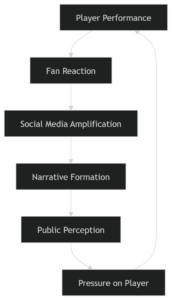
Data Narrative: Fan Army Influence Cycle
The Commercial Angle: Branding Over Team Spirit
Rise of Individual Branding
Modern cricket thrives on:
- Sponsorship deals
- Personal branding
- Social media influence
Players are no longer just athletes—they are brands.
This leads to:
- Fans investing emotionally in individuals
- Rivalries being monetized
- Engagement-driven narratives overshadowing team goals
Expert Analysis: Why Ashwin’s Warning Matters
Ashwin’s statement is not merely criticism—it is a reflection of a structural issue in modern cricket culture.
Key takeaways:
- Cricket is shifting from a team-first sport to a personality-driven spectacle
- Fan behavior is directly influencing public discourse and player treatment
- The ecosystem risks long-term damage if unchecked
Solutions: Restoring Balance in Indian Cricket
1. Promoting Team-Centric Narratives
Media and stakeholders must emphasize:
- Team achievements
- Collective performance
- Balanced analysis
2. Responsible Fan Engagement
Fans need to:
- Avoid toxic comparisons
- Respect all players
- Encourage healthy debate
3. Platform Accountability
Social media platforms should:
- Limit abusive content
- Promote verified information
- Reduce algorithmic bias toward toxicity
The Way Forward: Protecting the Spirit of Cricket
Indian cricket remains one of the most powerful sporting ecosystems in the world. However, the rise of toxic fan armies threatens its core values.
Ashwin’s warning serves as a critical reminder:
- Cricket must remain a team sport at its heart
- Fans must evolve from blind loyalty to informed support
- The ecosystem must prioritize respect, balance, and unity
Conclusion
The “fan army disease” highlighted by Ravichandran Ashwin is not just a temporary trend—it is a defining challenge for modern Indian cricket.
Addressing it requires collective responsibility from:
- Fans
- Players
- Media
- Digital platforms
Only then can the sport retain its integrity and continue to inspire millions across the nation.